


April Fools' Day comes and goes, leaving behind the harmless jokes and hoaxes that make you question everything for a moment. But scammers ignore the calendar.
April is a peak season for cybercriminals. It's not because employees are careless, but because busy schedules and distractions make it easier for deceptive tactics to slip through unnoticed.
Some scams now target savvy, well-intentioned employees simply focused on their daily tasks. Here are three active threats you should be aware of.
As you review these examples, ask yourself: Would everyone on my team take the time to identify these scams?
Scam #1: Fake Toll or Parking Fee Alerts
An employee receives a text that reads:
"You owe $6.99 for unpaid tolls. Pay within 12 hours to avoid penalties."
The message cites legitimate toll systems, matching the recipient's location. The small fee seems reasonable, so between meetings, they click the link and pay.
But the link is a trap.
In 2024 alone, the FBI logged over 60,000 reports of deceptive toll messages, with incidents soaring 900% in 2025. Cybercriminals have created more than 60,000 fake domains impersonating toll authorities, even targeting states without toll roads.
This scam thrives because the amount is low and the scenario familiar.
Defense: Official agencies never demand immediate payment via text links. Teach your team to always verify through official websites or apps and avoid replying to suspicious texts, as responses confirm active numbers inviting further scams.
Quick payments are bait; strict verification is your shield.
Scam #2: "Your File Is Ready" Phishing Emails
These emails blend seamlessly with everyday workflow.
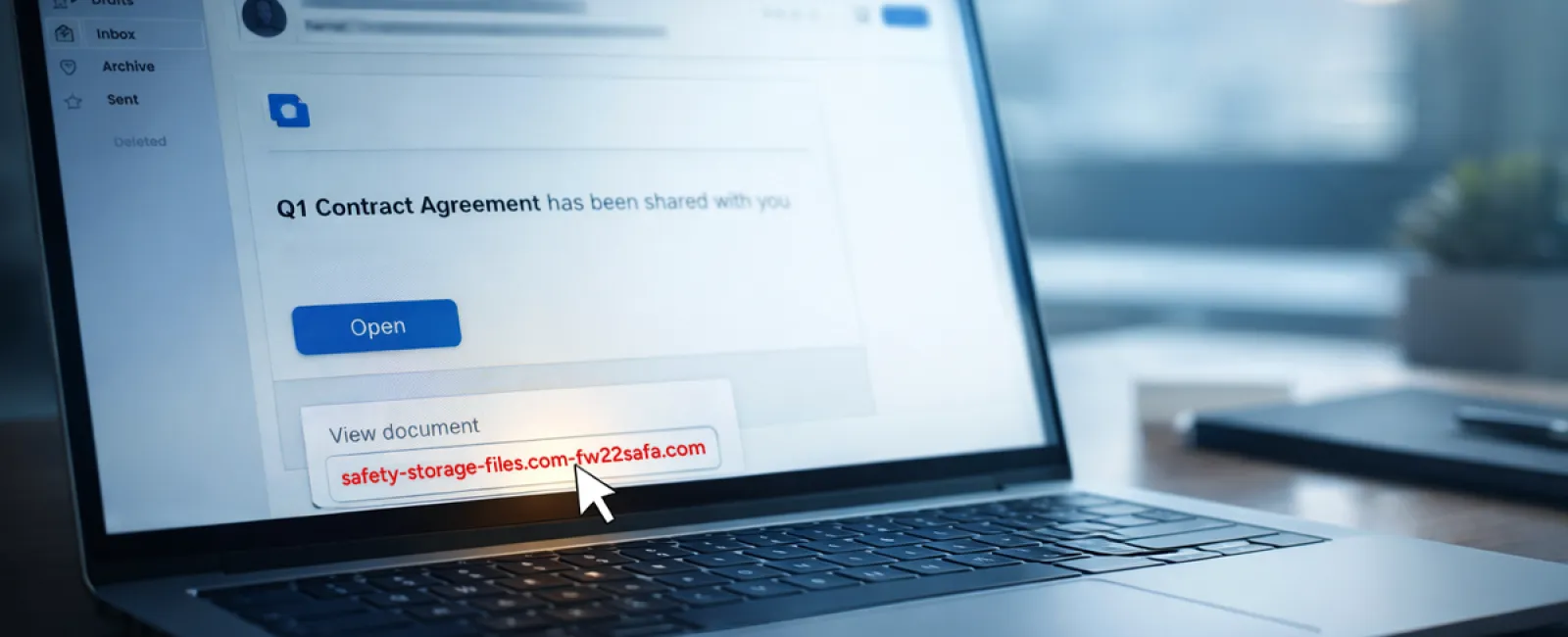
Someone receives an email claiming a shared document is available — maybe a contract via DocuSign, a spreadsheet in OneDrive, or a file on Google Drive.
The sender appears legitimate, formatting matches real notifications, so the employee clicks, logs in, and unwittingly hands over credentials.
This grants attackers access to your company's cloud system.
Phishing using trusted platforms surged 67% in 2025, with Google Slides phishing jumping over 200% in six months.
Employees are seven times more likely to fall for these than random emails because they look authentic.
Even worse, attackers sometimes use compromised accounts to send genuine-looking notifications from real corporate servers, bypassing spam filters.
Defense: Train staff to avoid clicking unexpected links. Instead, have them log into platforms directly to confirm shared files. IT teams can minimize risks by limiting external sharing and activating alerts for unusual logins — settings achievable within minutes.
Simple habits create strong barriers.
Scam #3: Highly Polished Phishing Emails
Gone are the days when phishing emails looked sloppy and obvious.
A 2025 study found AI-crafted phishing messages boast a 54% click rate, over four times higher than human-written ones. These emails mimic real company names, job titles, and workflows, harvested in seconds from public sources.
Targeted attacks can impersonate HR with employee verification requests or finance with vendor payment changes. One test showed 72% of employees engaged with vendor impersonation emails, nearly double the average.
These messages appear calm, professional, and make urgent-but-not-alarming requests — perfectly blending into the daily inbox.
Defense: Verify all requests involving sensitive data, payments, or credentials through a separate channel — a call, chat, or face-to-face. Always hover over email addresses to confirm domains and treat any urgent demand as a red flag.
True security protects without panic.
What It All Means
All these scams exploit familiarity, authority, timing, and the assumption that actions will be quick and harmless.
It's not about careless workers — it's about systems expecting everyone to react perfectly under pressure.
When a rushed click can cause damage, the problem lies in your processes — which are fixable.
How We Can Support You
Many business owners don't want to manage another training project or turn into the company's cybersecurity instructor.
They just want peace of mind knowing their business is protected behind the scenes.
If you're worried about your team's exposure — or know someone who should be — we're ready to help.
Book a clear, straightforward discovery call with us to discuss:
- Current cybersecurity risks for businesses like yours
- Common vulnerabilities hiding in daily operations
- Practical strategies to reduce threats without slowing down your team
No hype, no pressure — just honest insights.
Click here or give us a call at 1300 136 420 to schedule your free 15-Minute Discovery Call.
If this doesn't fit your needs, please share it with someone who would appreciate the warning. Often, knowing what to watch for is enough to turn a "would have clicked" into a "nice try."


