



Remember the old days of Nintendo where you'd blow into cartridges to get them working? That was our makeshift tech support.
Cartridge won't load? Blow on it. Still no luck? Blow even harder.
If that didn't help, a few sharp taps on the console usually did the trick.
Back then, we thought we were tech geniuses.
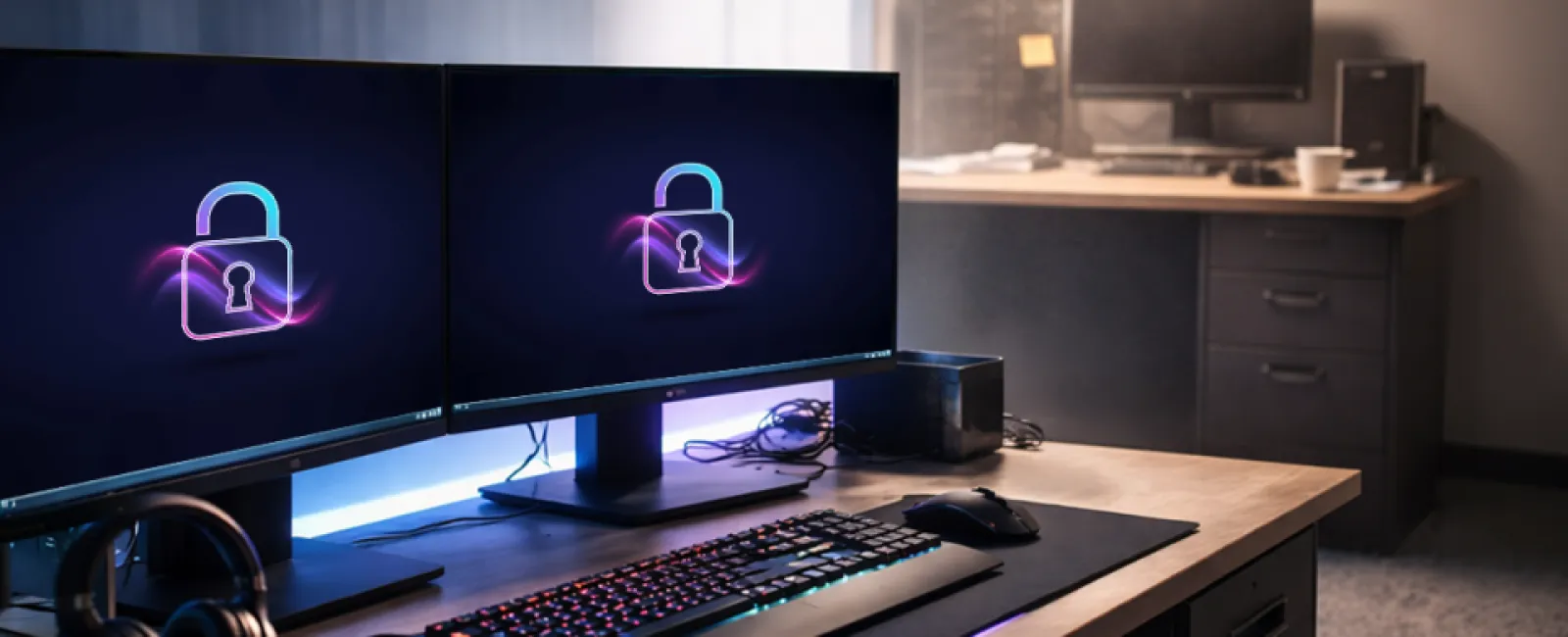
But today's kids have setups featuring solid-state drives, 32GB of RAM, processors capable of rendering entire films, mesh Wi-Fi that eliminates dead zones, real-time monitoring, and multi-factor authentication on all accounts.
Their systems are finely tuned, optimized, and continuously maintained.
Now, think about your office tech setup.
You might have a workstation from 2019 that takes ages to boot up, a printer jamming every Tuesday like clockwork, confusing shared folders like "New New Final FINAL," software that doesn't communicate, Wi-Fi that drops in the conference room, and laptops postponing updates for weeks.
Gamers demand peak performance. Businesses often settle for just getting by.
And this performance gap is costing more than most realize.
Why Gamers Outperform Businesses
It's not about budget. Gaming PCs cost roughly the same as business workstations, and business internet plans often offer faster speeds than residential ones. Affordable tools exist for monitoring and securing networks.
The real difference is the attention to detail.
Gamers eagerly install updates the moment they're available—system patches, graphics drivers, firmware, and game updates—because any lag means defeat. They'll update their gear late at night without hesitation.
Meanwhile, those deferred updates on your office devices are open invitations to security vulnerabilities, waiting to be exploited.
Gamers religiously back up their save files. Lose hours of progress once, and you learn. According to Nationwide Insurance, about 68% of small businesses lack a documented disaster recovery plan. For them, data loss means losing critical records, finances, and possibly the ability to operate.
Gamers watch performance metrics like CPU temps, frame rates, and network pings constantly. They act at the first sign of a problem. Business owners often don't notice issues until someone complains about slow internet. That's reactive, not proactive.
Your child wouldn't accept anything less than peak performance for their setup—which ironically isn't paying anyone's salary.
How Business Tech Gets Messy
Messy office networks aren't created intentionally.
Business technology grows piece by piece. A new tool here, accounting software there, CRM platforms, file sharing solutions, payroll systems, and security layers all added over time.
What starts as helpful tools can accumulate into a tangled, inefficient mess.
Gaming rigs are purpose-built for performance; business systems often evolve out of convenience. The former is strategic, the latter accidental—and accidental systems rack up hidden costs.
Back during the cartridge days, we didn't know better. Your business, however, has access to the right technology and expertise—you just need the right attention.
The Hidden Costs of Tolerating Lag
The biggest drain isn't dramatic outages, but daily annoyances everyone learns to ignore.
Five minutes waiting for login, searching for misplaced files, re-entering data into unsynchronized systems, rebooting sluggish machines multiple times a week, and relying on clunky workarounds.
These interruptions seem minor alone, but a UC Irvine study found that it takes 23 minutes on average to regain focus after a distraction. So a five-minute tech hiccup really costs closer to half an hour.
Multiply that across your whole team, five days a week, 52 weeks a year, and you're losing thousands of productive hours without noticing.
Gamers find lag unacceptable. Businesses often accept it as normal—and that "normal" is the most expensive word in tech.
The Important Question
When asked about their technology, many business owners say it "works fine."
But "working" and "working efficiently" are very different.
Are your tools integrated or simply coexisting? Are your systems streamlined or just piled on top of each other? Are your workflows supported by technology or working around it? Is anyone monitoring your network with proactive vigilance like a gamer watches frame rates?
Hardware is constantly changing. Today, software, automation, security, and workflow design are the key drivers of true productivity and profitability—and they require ongoing focus.
Take Our Quick Self-Assessment
Before you finish, ask yourself:
· When was the oldest computer in your office purchased?
· Did your backups complete successfully last week?
· Do you have any devices with pending updates ignored for more than a week?
· Can you tell your office internet speed off the top of your head?
Your child can answer these instantly for their gaming setup.
If you can't answer for your business systems, it's not a failure—it means no one's paying close enough attention. And that's a problem that can be fixed.
How We Help
We guide businesses from technology overload to streamlined optimization. We step back to assess what's redundant, outdated, slowing you down, and what can be simplified or automated for maximum efficiency.
It's not about more technology, but better technology.
If you want to explore how your systems, software, and processes affect productivity and profitability—or find hidden costs—we're ready to talk.
No jargon. No pressure. No gamer references needed.
Click here or give us a call at 1300 136 420 to schedule your free 15-Minute Discovery Call.
Know another business owner putting up with IT lag? Share this with them.
Because in both business and gaming, performance is everything.


